

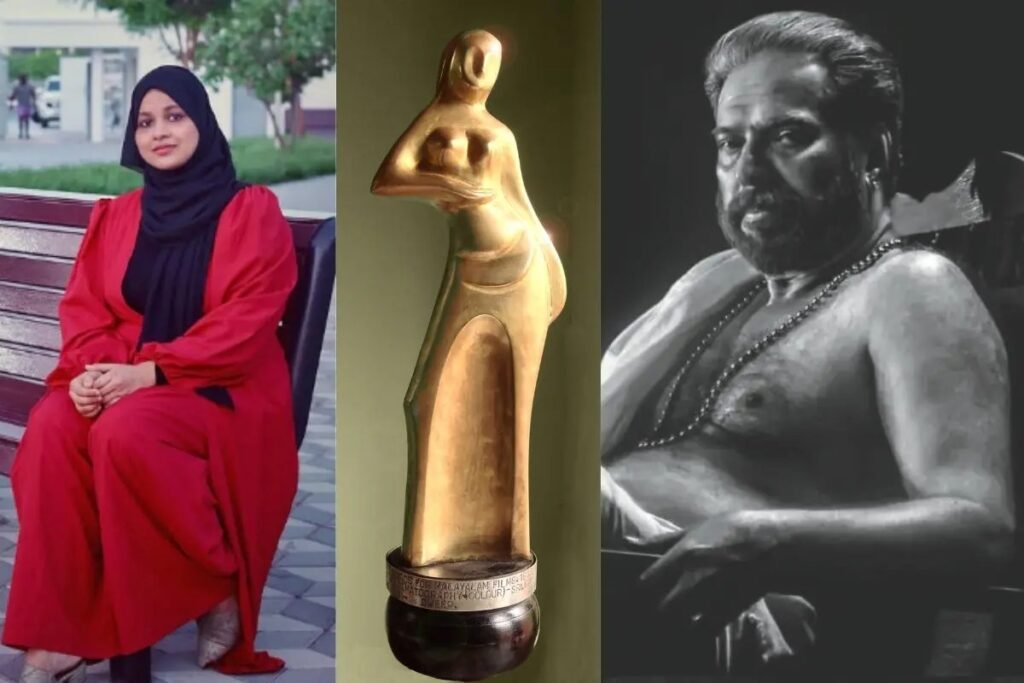
This year’s Kerala State Film Awards radically shifted the Indian cinematic landscape, marked by the unprecedented win of debutante Shamla Hamza as Best Actress for her performance in “Feminichi Fathima”. While her powerful portrayal earned praise from critics, her victory came amid nationwide scrutiny, intensified by the jury’s chairperson, Prakash Raj, who openly condemned the credibility of the National Film Awards and reignited conversation about what true artistic recognition entails.
Shamla Hamza: From Debut to Acclaim
Shamla Hamza’s journey is emblematic of the new wave in Malayalam cinema. Chosen from 128 entries and among several strong contenders for Best Actress, Hamza’s performance in Feminichi Fathima was critically hailed as deeply authentic. The jury, led by Prakash Raj, favoured her honest, unaffected style, a stark contrast to much commercial fare, signalling a renewed focus on storytelling and genuine talent over stardom.
Her selection, highlighted in multiple press conferences and media, notably reflected the evolving priorities of regional awards and the inclusivity of new artists. Hamza herself has spoken about remaining grounded and valuing her craft over fame, reinforcing her image as a symbol of artistic integrity.
Prakash Raj’s Blunt Critique: National Film Awards Under Fire
The real storm at this year’s awards announcement came from Prakash Raj, whose role as jury chairman was marked by an unusually candid assessment of the national recognition system.
Raj lambasted the National Film Awards, openly saying “they don’t deserve Mammootty” in reference to the acclaimed actor winning his seventh Kerala State Best Actor trophy for “Bramayugam,” but being repeatedly overlooked on the national stage. He declared the National Awards “compromised,” criticising the process for being susceptible to political influence and referencing “propaganda films” receiving top honours in recent years. This perceived bias and politicisation, he argued, undermined the value and legitimacy of the awards at the national level.
Raj contrasted this with the Kerala State Film Awards process, where he affirmed that being brought in as an “outsider” allowed him genuine autonomy without interference, enabling the selection of truly deserving winners. The jury’s thorough vetting, including rejecting categories like Best Children’s Film for lack of suitable entries, was presented as evidence of these higher standards.
Artistic Merit Versus Political Sentiment
Prakash Raj’s statements have revived and intensified a crucial debate: are India’s major film awards recognising true artistic merit, or are they swayed by political or commercial agendas? The National Film Awards have, in recent years, faced similar criticism regarding winners perceived to reflect the “sentiments” of the day, sidelining quality performances and groundbreaking new artists.
Raj referenced the recent wins of films like “The Kashmir Files” and “The Kerala Story” as emblematic of this problem, awards granted to “files and piles,” rather than depth and artistry. This critique was widely echoed on social media and more nuanced industry forums, with calls for reforms and more independent jury composition.
Kerala’s Rigorous Selection Process and Wider Implications
According to multiple sources, the structure of the Kerala State Film Awards involved two rounds of screening and a final jury composed of veteran professionals. Out of 128 submitted films, only 26 advanced to the final stage. This process stood in stark contrast to what Raj described as the opaque selection systems elsewhere.
Major categories saw fierce competition this year, with established names like Mammootty and new talents like Asif Ali and Shamla Hamza vying equally for honours. The awards also saw “Manjummel Boys” take home the Best Film award, spotlighting the jury’s focus on narrative and technical brilliance.
Raj’s call for improvement extended to children’s cinema, lamenting the absence of suitable entries and urging filmmakers to create meaningful works for younger audiences.
Social Media and Public Reaction
The awards and jury comments sparked widespread online debates. The selection of Shamla Hamza as Best Actress was broadly celebrated, viewed as a win for authentic storytelling. Meanwhile, criticisms were levelled against the perceived inconsistencies at the national level, and the controversial honouring of some artists facing criminal allegations left fans and commentators divided.
Public sentiment also highlighted the importance of transparency and the need to safeguard creative accomplishments from politicised interests or superficial popularity.
Looking Forward: A New Paradigm for Indian Cinema?
This year’s Kerala State Film Awards, led by Shamla Hamza’s stunning recognition and Prakash Raj’s uncompromising stance, have become a flashpoint for a wider reassessment of how India celebrates artistic greatness. Calls for clarity, fairness, and merit-based recognition now dominate both industry discussions and audience conversations.
Hamza’s win represents hope for aspiring talents. Raj’s critique serves as a rallying cry for reform, advocating that excellence should not be overshadowed by external pressures. The juxtaposition of Kerala’s transparent and rigorous process against the alleged compromises of the National Film Awards may well herald a new ethos for governance and artistic respect across India’s diverse film landscape.