

A deadly blast rocked the area near Delhi’s iconic Red Fort Delhi Blast on Monday evening, killing at least nine people and injuring over 20. Union Home Minister Amit Shah has ordered all investigative and intelligence agencies to “hunt down” every individual connected to the attack, promising severe action as authorities probe the incident as a terrorist act.
What Happened at Red Fort
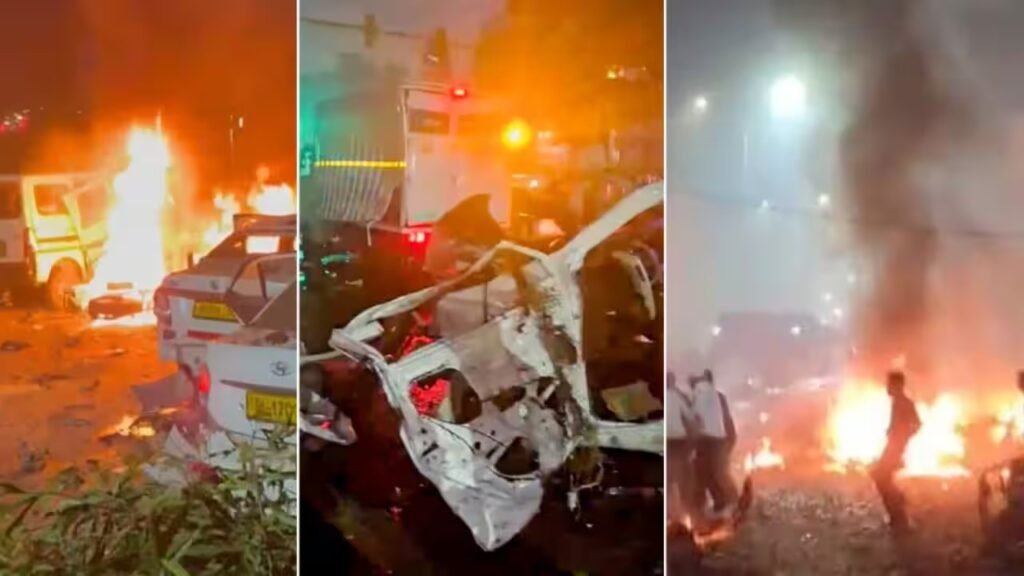
A Hyundai i20 car exploded near Gate No. 1 of the Red Fort Metro Station around 6:52 pm, causing chaos at the busy intersection. The explosion instantly killed several bystanders and left multiple vehicles damaged in the vicinity. Within minutes, local law enforcement and specialised agencies, including the National Security Guard (NSG) and National Investigation Agency (NIA), arrived at the scene to begin a detailed investigation.
The Investigation of Red Fort Delhi Blast: What We Know
Authorities have invoked the Unlawful Activities (Prevention) Act (UAPA), treating the case as a terror attack based on forensic and intelligence evidence. Forensic teams found the blast was triggered using ammonium nitrate, a powerful explosive. Investigators connected the incident to a recent raid in Faridabad, Haryana, where 2,900 kg of the same bomb-making chemical was seized. Three doctors from Jammu and Kashmir, Adeel Ahmad Rather, Muzammil Shakeel, and Umar Mohammad, are under investigation. Umar Mohammad, believed to be at the wheel of the car during the blast, and his family members have been detained for questioning and DNA identification.
Terror Links and Suspects
Initial findings link the suspects to a larger terror cell, with intelligence pointing toward connections with Pakistan-based groups such as Jaish-e-Mohammed (JeM). Security agencies say the timing and method recall previous attacks aimed at destabilising the capital and targeting iconic national landmarks. The NIA has now taken over all aspects of the investigation, coordinating with police across states to trace the masterminds, handlers, and financiers behind the blast.
National Reaction and Security Measures
Prime Minister Narendra Modi and President Droupadi Murmu expressed deep condolences, stressing that such acts will not cow the nation. Amit Shah convened a top-level security meeting with all senior officials and ordered security forces to intensify surveillance, especially at all prominent and sensitive locations in Delhi and other key Indian cities. The Lal Quila Metro Station will remain closed until further notice as a precaution.
High alert has been issued across Delhi, Mumbai, and several major state capitals. Security has been enhanced with the addition of extra checkpoints, patrols, and random vehicle checks near key public and government buildings.
Eyewitness and Ground Reports
Eyewitnesses described a horrifying scene: a slow-moving car at a traffic signal suddenly erupted into a massive fireball, spreading panic. Commuters on the busy street rushed to save the wounded as emergency responders fought fires and secured the area. Multiple news outlets in India and abroad prominently covered the attack, with many noting that this is among the deadliest blasts in the capital in over a decade.
The Political Fallout
The attack spurred immediate political reactions. The opposition criticised gaps in security, while the government reiterated its hardline stand on terrorism. Shah’s commitment to “hunt down” every culprit saw all relevant agencies mobilised in a coordinated crackdown.
International Reactions
World leaders condemned the attack, offering support and solidarity to India. The blast was widely reported in Pakistani media, drawing attention to regional security issues and possible cross-border involvement as Indian authorities deepen the terror probe.
What’s Next: Delhi’s Response
- Intensive, round-the-clock investigation led by NIA.
- Ammonium nitrate trail being followed into terror funding and logistics networks.
- Multiple detentions and DNA tests, including the family of prime suspects, are underway.
- Security protocols have been upgraded at all metro stations and public gathering hubs.
- Ongoing high alert in major Indian cities for possible connected threats.
Public Appeal and Community Resilience
Authorities have urged citizens to remain vigilant and report any suspicious activity. Community leaders called for calm, even as grief and anger engulfed the families of those killed and injured.
Delhi’s tragic blast reminds the city of past attacks, but also highlights the resilience shown by its citizens and responders in times of crisis. With a national focus on rapid justice and prevention, the capital stands united against those seeking to spread fear and terror.