
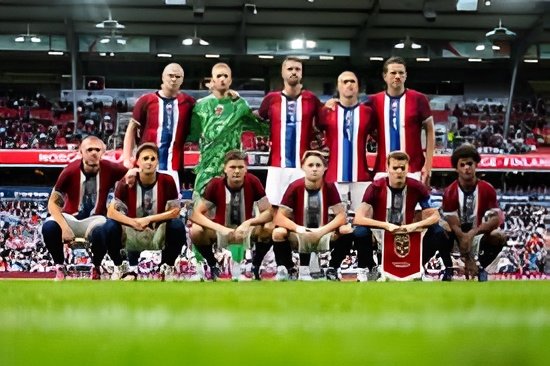
Norway’s triumphant 4-1 victory over Italy in Milan on November 16, 2025, was much more than just a milestone; it was a tectonic shift in European football’s power balance, breaking a 27-year absence from the FIFA World Cup and catapulting Norway into the ranks of the continent’s elite. Facing the traditional powerhouse of Italy, Norway not only outplayed its rivals but also showcased the fruits of years of rebuilding, tactical evolution, and a new generation of stars.
At San Siro, the tension was palpable. Italy, with everything on the line, struck first via Francesco Pio Esposito in the 11th minute, igniting hopes for an improbable comeback to top the group. But Norway’s resilience surfaced in the second half, as Antonio Nusa equalised with a ferocious left-foot strike. What followed was footballing brilliance, Erling Haaland’s lightning double in the space of seconds, followed by Jorgen Strand Larsen’s late goal, completely deflating the hosts and leading Norway to an emphatic qualification.
Key Moments and Tactical Analysis
- Italy’s Early Promise: The Azzurri’s opener came from an energetic start, pressing Norway’s defence and capitalising on a cross from Giovanni Di Lorenzo that Esposito finished smartly.
- Norway Answers Back: Norway’s tactical discipline, patience, and pressing paid off as they controlled possession and began dictating the tempo. Nusa’s equaliser in the 63rd minute marked a turning point, silencing the Italian crowd.
- Haaland’s Decisive Brilliance: Erling Haaland, already a European superstar, seized the big occasion with two goals in rapid succession, the first a stunning volley and the second a classic tap-in, further cementing his legacy and pulverising Italian hopes.
- Late Flourish: Jorgen Strand Larsen capped the performance, darting past defenders for Norway’s fourth, driving the final nail in Italy’s World Cup hopes for direct qualification.
Statistical Dominance
Norway’s qualifying run was historic for its consistency and attacking power. They completed Group I with a perfect record: 8 wins, 0 draws, 0 losses, scoring an extraordinary 37 goals while conceding only 5, the best attack and defence in European qualifying. Haaland alone netted 16 goals during the campaign, equaling Robert Lewandowski’s European record. Their goal difference underscored both flair and efficiency, needing only to avoid a catastrophic defeat against Italy to secure the group’s sole automatic World Cup spot.
| Team | Goals Scored | Goals Conceded | Points | Record |
|---|---|---|---|---|
| Norway | 37 | 5 | 24 | 8W 0D 0L |
| Italy | Data not specified | Data not specified | 18 | 6W 0D 2L |
Haaland, Ødegaard, and Norwegian Renewal
The heart of Norway’s resurgence has been the synergy between striker Erling Haaland and midfielder Martin Ødegaard. Haaland’s physicality and clinical finishing tore through defences, while Ødegaard, Norway’s captain and an Arsenal star, orchestrated midfield plays, knit the team’s transitions, and provided leadership off the pitch. Their generation benefited from a decade-long overhaul by the Norwegian Football Federation, which included improved youth academies, modernised coaching, and tactical education at every level.
Ståle Solbakken, Norway’s head coach since 2020, deserves immense credit for building a side that blends attacking flair with defensive discipline. His flexible system, focused on pressing, quick transitions, and compact shape, proved too sophisticated for opponents throughout qualifying. Previously dismissed by critics, Solbakken’s turnaround has validated a process that prizes teamwork over individualism.
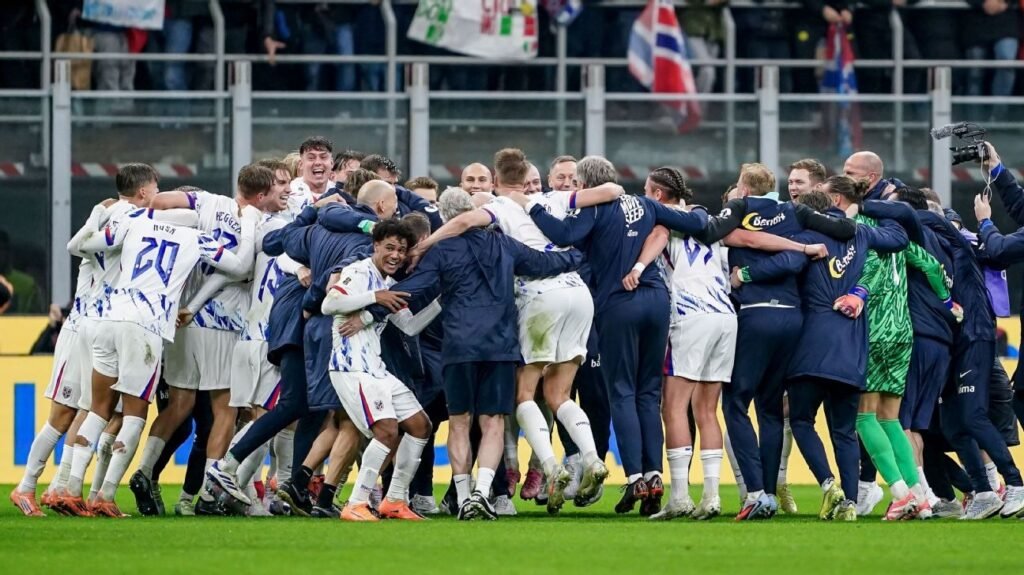
Italy: Rebuilding Amid Disappointment
For Italy, the defeat was a painful reminder of ongoing struggles: missing two previous World Cups and now consigned to the play-offs once again. Despite moments of quality and a promising opening, Italy’s lack of depth and injuries told. Coach Luciano Spalletti, fired after a previous defeat to Norway, left a squad in transition, missing veterans and forced into risky reshuffling to avoid suspensions. While talents like Barella returned, Italy’s midfield failed to keep pace in the second half, and their defensive errors proved costly.
In the aftermath, figures like Manuel Locatelli and Gianluigi Donnarumma admitted the team’s psychological fragility, calling for serious change before the play-offs. Italy, always a giant, now faces an urgent need for tactical renewal and mental fortitude.
How Norway Became One of Europe’s Best
Norway’s transformation didn’t happen overnight. Years of investment in youth, a generation of exportable talent, and coherent tactics have made them continental contenders. The fruits of this policy are evident:
- Youth Academy Investment: Clubs focused on developing technically proficient, tactically smart players, producing stars like Haaland, Nusa, and Ødegaard.
- Domestic and International Synergy: Norwegian internationals thriving abroad bolstered the national team’s technical level, while domestic leagues supplied depth.
- Defensive Solidity: Norway’s defence, long considered a weakness, became a fortress thanks to targeted coaching, having conceded just five goals in eight qualifiers.
- Adaptive Playing Style: Solbakken’s philosophy enabled Norway to switch between pressing and possession, exploiting rivals’ vulnerabilities. Their ability to break down Italy’s renewed but vulnerable backline showcased tactical maturity.
Norway’s campaign signals a broader shift in Scandinavian football, with the nation emerging as a genuine threat at the global level.
What’s Next? Norway’s World Cup Promise
With qualification sealed, Norway’s optimism is sky-high heading into the FIFA World Cup in the United States, Canada, and Mexico. Their perfect qualifying record, attacking arsenal, and team cohesion give them the pedigree to not just compete, but to challenge traditional giants. For Italy, redemption depends on the play-offs and the ability to learn from these crucial defeats.
Norwegian football’s 2025 renaissance marks a new era for the game, where patience, investment, and tactical innovation have propelled a once-peripheral nation into the heart of world football.