
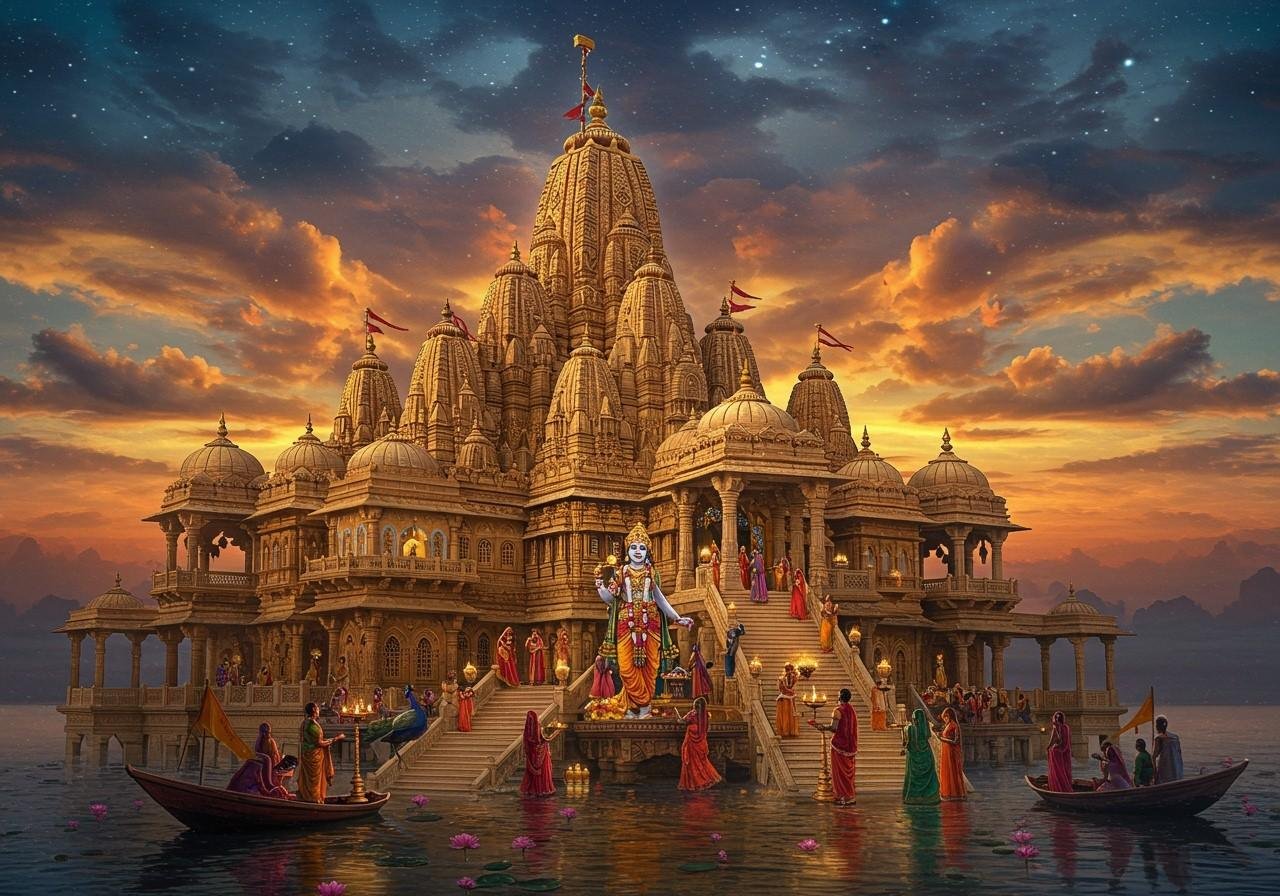
The Dwarkadhish Temple, also known as the Jagat Mandir, is one of India’s most treasured spiritual destinations, drawing visitors with its rich tapestry of mythology, history, architecture, and culture. Situated on the tranquil shores of the Arabian Sea in Dwarka, Gujarat, this sacred Hindu temple dedicated to Lord Krishna stands as both a thriving center of devotion and a magnet for global tourists.
The awe-inspiring Dwarkadhish Temple, or Jagat Mandir, is revered as one of the four sacred Char Dham pilgrimage sites, forming a cornerstone of Hindu spiritual tradition. Its association with Lord Krishna as ‘Dwarkadhish’, the King of Dwarka, deepens its importance for devotees and culture seekers alike.
Location and Accessibility
Dwarkadhish Temple is located in the city of Dwarka, in Gujarat, India, positioned on the banks of the Gomti River, with the Arabian Sea as its scenic backdrop. The area is well-connected by air, rail, and road:
- Nearest Airport: Jamnagar Airport, 131 km away (about 2 hours by taxi).
- Nearest Railway Station: Dwarka Railway Station, only 2 km from the temple.
- Road: Major highways connect Dwarka to cities like Ahmedabad, Rajkot, Porbandar, and Delhi, with taxi and bus options available for pilgrims and tourists.
Key Details:
Historical Background
The history of the Dwarkadhish Temple stretches back over two millennia. According to legend and archaeological evidence, the original temple was constructed around 200 BCE, while some traditions claim that Vajranabh, Lord Krishna’s great-grandson, built it about 2,500 years ago over Krishna’s palace, the Hari Griha.
Over centuries, the temple was subject to multiple reconstructions and expansions. Significant rebuilding occurred during the reigns of the Gupta dynasty and later during the 15th–16th centuries after invasions. Mahmud Begada destroyed the earlier structure in 1472, but it was soon restored, underscoring the resilience of local devotion.
Architectural Marvel
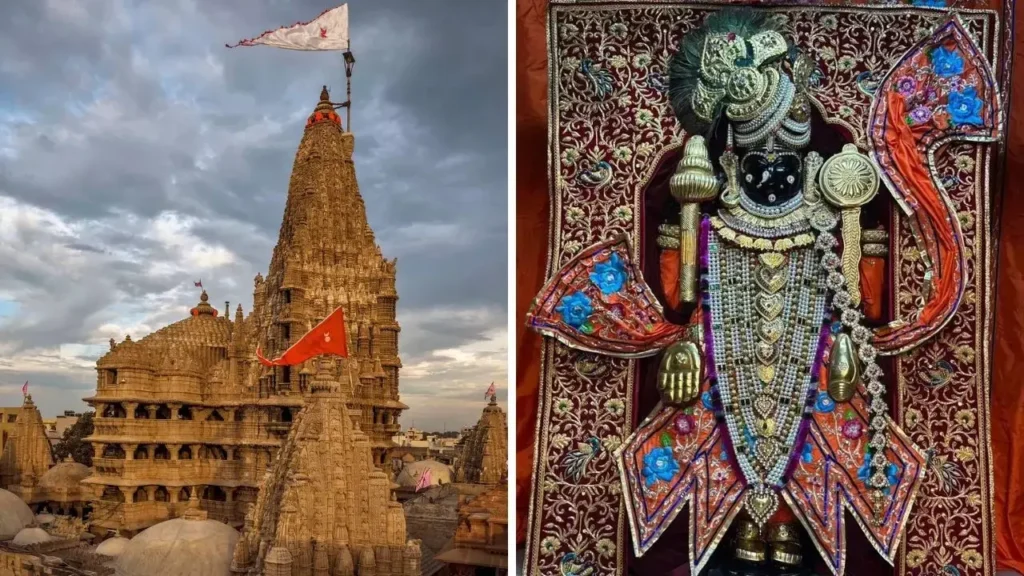
The temple’s architecture is a classic example of Chalukya style, marked by its five-storied facade, towering 43 meters high, supported by 72 finely carved limestone pillars. A magnificent flag, changed five times daily, flies atop the temple, a symbol of continued worship.
Devotees ascend more than 50 steps flanked by sculpted mythical characters to reach the main sanctum, housing a charismatic black marble idol of Lord Krishna. The temple complex contains shrines dedicated to Subhadra, Balarama, Revathi, Vasudeva, Rukmini, and other deities.
Two prominent entryways, the Swarga Dwar (Gateway to Heaven) and Moksha Dwar (Gateway to Liberation), guide pilgrims through a ritual journey punctuated by spiritual symbolism.
Cultural and Religious Significance
Dwarkadhish Temple is not just an emblem of architectural prowess but also a living center of spiritual energy. It is integral to the Char Dham and Sapta Puri (seven sacred cities) pilgrimages and is enshrined in the Divya Prabandha and ancient Indian scriptures like the Mahabharata and Skanda Purana.
According to Hindu belief, Lord Krishna migrated from Mathura to Dwarka, establishing his kingdom and rendering the city a locus of Vaishnavite spirituality. Pilgrims believe that darshan (viewing) at Dwarkadhish Temple cleanses the soul, leading devotees closer to ‘moksha’, liberation from the cycle of rebirth.
Major Festivals and Rituals
The temple’s spiritual ambiance is accentuated during Janmashtami, Krishna’s birthday, when thousands of devotees gather for elaborate rituals, devotional music, and dance. Other significant festivals include Holi, Diwali, and Annakut, each commemorated with distinctive rituals and grandeur.
Tourism and Visitor Experience
As a primary tourist spot, the temple is surrounded by a cluster of attractions enriching the pilgrim’s journey:
- Sudama Setu: A bridge over Gomti creek, connecting the temple area to scenic beach spots.
- Nearby Pilgrimage Sites: Nageshwar Jyotirlinga, Bet Dwarka Island, Rukmini Devi Temple, Gomti Ghat, and Gopi Talav, offering a holistic spiritual circuit.
- Local Culture: Visitors are welcomed into a vibrant world of Gujarati heritage, folk songs, rituals, markets, and cuisine add to the immersive experience.
Economic Impact and Revenue
As one of Gujarat’s premier spiritual sites, Dwarkadhish Temple generates considerable revenue through donations and offerings. For instance, during the fiscal year 2020-21, the temple reported a revenue of Rs 6.35 crores in cash, alongside donations in gold and silver. This income sustains temple upkeep, community events, charity, and local development.
How to Reach Dwarkadhish Temple
For seamless travel to this spiritual destination:
- By Air: Jamnagar Airport (131 km), Porbandar Airport (108 km) are the closest.
- By Train: Dwarka Railway Station is conveniently near the temple (2 km by road).
- By Road: National highways and state transport link Dwarka to major cities. Taxis and buses are readily available from regional urban centers.
Places to Visit Near Dwarkadhish Temple
- Bet Dwarka: Believed to be the original residential place of Lord Krishna.
- Nageshwar Jyotirlinga Temple: One of Shiva’s twelve Jyotirlingas.
- Rukmini Devi Temple: Dedicated to Krishna’s principal wife.
- Dwarka Beach and Gomti Ghat: Offer tranquility and scenic views, completing the spiritual circuit.
FAQs About Dwarkadhish Temple
What is the best time to visit Dwarkadhish Temple?
The ideal period is between November and February, when the weather is pleasant for sightseeing and pilgrimage.
What are the temple hours, and is there an entry fee?
The Dwarkadhish Temple is open from 7 am to 12:30 pm and 5 pm to 9 pm. Entry is free for all visitors.
Can non-Hindus visit the temple?
The temple allows entry for visitors of all faiths with respect for temple customs and rituals.
What is the importance of the temple flag?
A flag hoisted atop the temple’s spire, changed five times daily, is an act of deep devotion representing surrender to Lord Krishna.
Is it necessary to take a dip in the Gomti River before entering?
It is tradition (but not compulsory) for devotees to purify themselves with a symbolic dip in the Gomti River before entering the temple via the Swarga Dwar.
What nearby accommodations are available for tourists?
Dwarka offers a range of hotels, guesthouses, and dharamshalas (pilgrims’ rest houses) for diverse budgets, many within walking distance of the temple.
Are photography and mobile phones allowed inside the temple?
Cameras and mobile phones are generally restricted within the temple premises to maintain sanctity and security.
How much time should I allocate to explore the temple and surroundings?
A comprehensive visit, including darshan and nearby attractions, may take 1–2 days, depending on schedule and interest.
Conclusion
The Dwarkadhish Temple, with its divine heritage, monumental architecture, and unbroken traditions, remains a cornerstone of Hindu faith and Indian cultural identity. Its timeless sanctity, mesmerizing rituals, and coastal beauty offer a transcendent spiritual experience, promising both devotion and wonder for all who journey to its sacred threshold.