

A powerful blast shook the Nowgam blast on the outskirts of Srinagar, Jammu and Kashmir, on the night of November 14, 2025, leaving at least nine people dead and 32 others injured. The explosion, quickly described by authorities as accidental rather than an act of terror, took place while investigative teams were extracting samples from a large cache of explosives recently confiscated from a terror module operating in Haryana’s Faridabad. The government, Jammu and Kashmir police, and the Ministry of Home Affairs (MHA) have all emphasised the accidental nature of the blast and cautioned against unnecessary speculation.
Sequence of Events: How the Blast Happened
The accident occurred late on Friday, as police and forensic experts attempted to extract and catalogue evidence from approximately 2,900 kilograms of explosive substances, which included ammonium nitrate and other chemicals associated with recent terrorist activities. These explosives were seized as part of a wide-ranging investigation into a suspected “white-collar” terror module with connections to Haryana and Jammu & Kashmir.
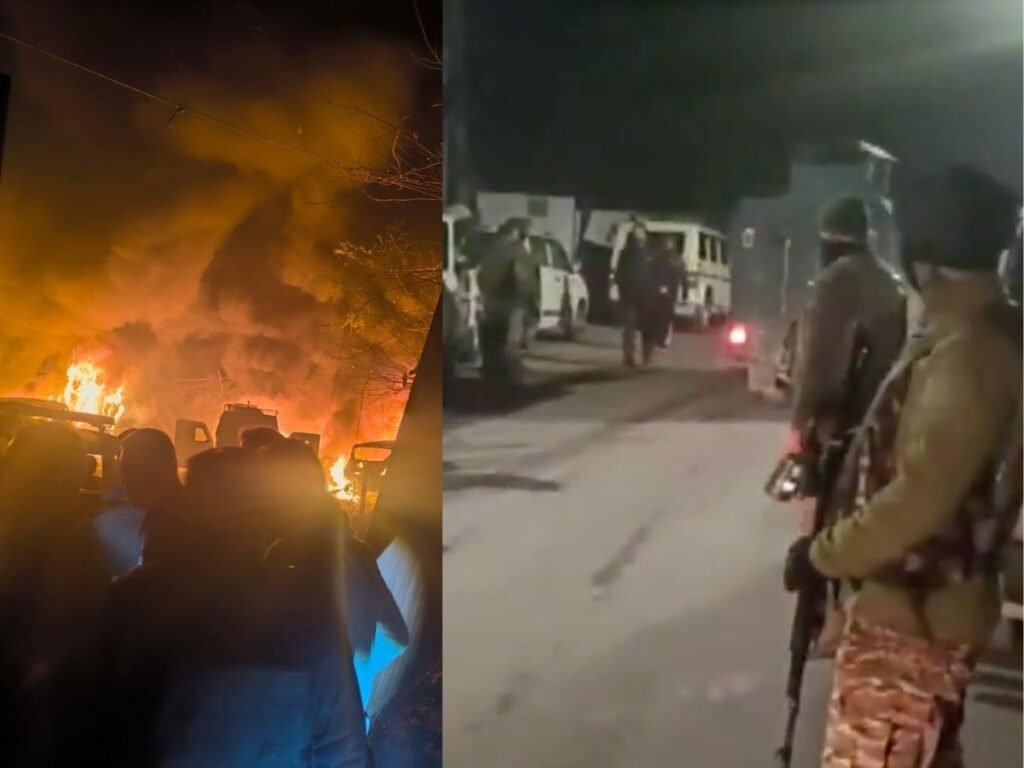
During the operation, officials were following established protocols at the Nowgam police station, where most of the seized materials had been transported for examination. The explosives had been stored at this location in accordance with investigative procedures and were being sampled for further analysis at forensic laboratories. Suddenly, an accidental detonation rocked the premises, resulting in widespread damage to the police station and nearby structures, setting off a fire that destroyed vehicles and injured several on-site personnel and civilians found in adjacent areas.
Casualties and Damage
The blast claimed the lives of nine individuals, a majority of whom were professionals involved in the investigation: three members of the Forensic Science Laboratory, two revenue department officials, two police photographers, one State Investigation Agency officer, and a local tailor. Among the wounded were at least 27 police personnel, three civilians, and several government officials. Five of the injured were reported to be in serious condition and rushed to the nearest hospitals for treatment. Rescue and fire teams responded immediately to bring the situation under control.
Official Statements and the MHA Response
Jammu and Kashmir’s Director General of Police, Nalin Prabhat, addressed the media soon after the incident, stressing that the explosion was a result of an accidental detonation during the extraction and examination of volatile and unstable chemicals. He urged the public to avoid speculation or rumours that could impede the investigation or incite unnecessary anxiety.
Corroborating the state police, a formal statement from the MHA, delivered by Joint Secretary Prashant Lokhande, highlighted that initial evidence suggested the explosion was accidental. Lokhande reiterated that ongoing speculations were unwarranted, and all procedures were being followed to forward explosive samples for further forensic testing. The government strongly advised against linking the incident to any terror act or deliberate foul play without factual substantiation.
The Terror Module Investigated
The explosive cache at the heart of the tragedy was recovered just days earlier by security agencies dismantling a sophisticated terror network. The investigation, which traced a trail from suspicious posters in Jammu & Kashmir to Faridabad in Haryana, led to the arrest of eight people, including three doctors affiliated with Al-Falah University. The suspects were believed to be preparing improvised explosive devices (IEDs) for future attacks. Authorities also suspect a connection between this cache and the recent car bombing near Delhi’s iconic Red Fort, which left thirteen people dead.
Connection to Other Recent Explosions
The Nowgam blast took place only days after a car exploded at a busy intersection near the Red Fort in New Delhi, causing significant casualties. Both incidents involved materials and suspects linked by the ongoing investigation. While the Red Fort bombing is being probed as a terrorist act, the Nowgam incident is firmly being treated as an unfortunate accident during the lawful handling of evidence, according to both local and central authorities.
Security and Investigative Procedure
Security was immediately enhanced at the blast site, with mine-detection teams deployed to sweep the area for any remaining unstable materials. Forensic experts and bomb disposal squads were tasked with clearing the premises and investigating the precise sequence of events that led to the detonation. Preliminary findings indicate that the chemical instability of the seized explosives played a key role in the accident, underscoring the hazards involved in handling such volatile materials, even under strict protocol.
Public Appeal and Future Steps
Amid the tragedy and rumours, all levels of government and police leadership have called for calm and patience as specialised teams piece together the final report. Samples from the site are being analysed by top forensic laboratories to ensure a thorough, scientific understanding of the blast mechanism. The Ministry of Home Affairs underlined its commitment to transparency and accountability, promising a detailed public statement upon conclusion of the investigation. In the meantime, officials have strongly discouraged the spread of misinformation through social media or unverified news outlets.
Aftermath: Community Impact and Support
The blast has left the Nowgam locality and broader Srinagar community in mourning. The loss of police officers, forensic experts, and support personnel, all performing their duties in pursuit of justice, has drawn condolences from senior government leaders. Arrangements have been made for the treatment of the injured and counselling for bereaved families, while state functionaries review protocols for evidence storage and handling to avert such tragedies in the future.